Portfolio
Kenna Hughes-Castleberry
- Home >>
- Journalism Work
As a science journalist and communicator, I keep my eyes and ears open for unique stories, whether it’s artificial intelligence, animal cognition, or the strange and brilliant worlds of octopuses and corvids. I’m equally driven to spotlight the people behind these discoveries and to examine diversity across the tech landscape, especially the experiences of women and underrepresented communities who are reshaping these fields in real time.
I take a human-first approach to reporting: building trust with my sources, developing real relationships, and—when time allows—sending quotes back for clarity, following up on emerging threads, and sharing each published story with the people who made it possible. I believe this kind of care isn’t just good practice; it’s essential to maintaining strong relationships and producing journalism that reflects the full depth of lived experience.
I publish widely as a freelance science journalist, with work appearing in outlets such as National Geographic, Science Friday, Scientific American, New Scientist, Discover Magazine, Ars Technica, LiveScience, Space.com, Nature Biotechnology, Astronomy Magazine, Leaps Magazine, Hakai Magazine, The Transmitter, Nautilus Magazine, ChemistryWorld, Earth Island Journal, Phys.org, Colorado Magazine, Inside Quantum Technology, The Quantum Insider, The Deep Tech Insider, The Metaverse Insider, The Debrief, A-Z Animals and OctoNation.
Articles
Scientists finally sequence the vampire squid's huge genome, revealing secrets of the 'living fossil'
LiveScience
Never-before-seen adorable pink bumpy snailfish with funny little beard filmed in deep canyon off California coast
LiveScience
'Very novel and very puzzling': Unknown species of squid spotted burying itself upside down, pretending to be a plant
LiveScience
He Found A Bizarre Octopus, But No One Believed Him
Science Friday (article and audio segment)
Cuttlefish Ink is Used for More than Just Evading Predators: It’s Part of Their Bizarre Mating Rituals
The Debrief
New Study Suggests Octopuses have Individual Differences When it Comes to Problem Solving
the Debrief
New Results Reveal How to Build a Nuclear Clock
Scientific American (November 2023 print issue and online)
Interstellar comet 3I/ATLAS wasn't supposed to be there — meet the astronomer who discovered it
Space [dot] com
Earthworm robots could be an invaluable tool for exploring other worlds
Astronomy Magazine
The Woolly Mammoth Meatball Could Kick Off a Trend of Eating Extinct Meats
Discover Magazine
How Sensors Using Quantum Entanglement Could Improve Earthquake Detection
Discover Magazine
A quantum video reel: Time-of-flight quantum tomography of an atom in an optical tweezer
Physics.org
Welcome to the Digital Afterlife
PDFs
'Octopus X' full bibliography
The Dark Side of Polling, an I,Science article about the process of polling
Biological Privacy Settings, an I,Science article about DNA databases, and cold cases
Tesla’s Desperation, an I,Science Magazine article about the challenges Tesla faced
The Tesla Angle, an I,Science Magazine article about Tesla’s Death Ray and the FBI
Here you can find the Medicinal Plants Tour from the Denver Botanic Gardens that I created. The tour is currently the third most popular tour on their website, and has a series of corresponding YouTube videos of recipes you can try.
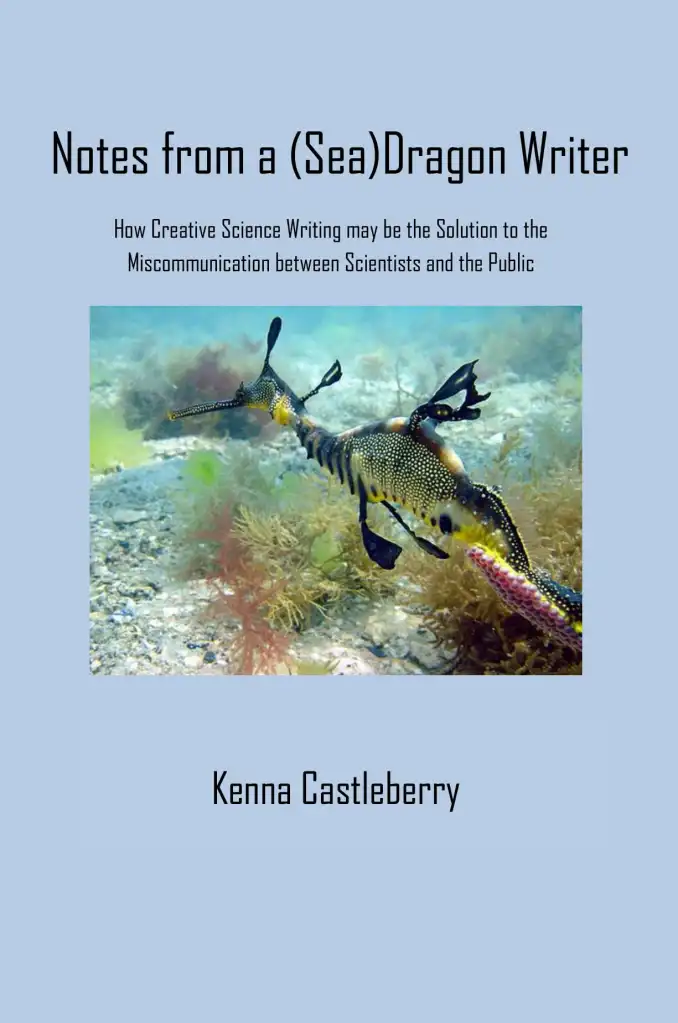
Here you can find the link to my undergraduate honors thesis, which I published as a book. It covers the story of me interviewing scientists and science writers around the world to talk about science communication and the lives and conservation of weedy sea dragons.